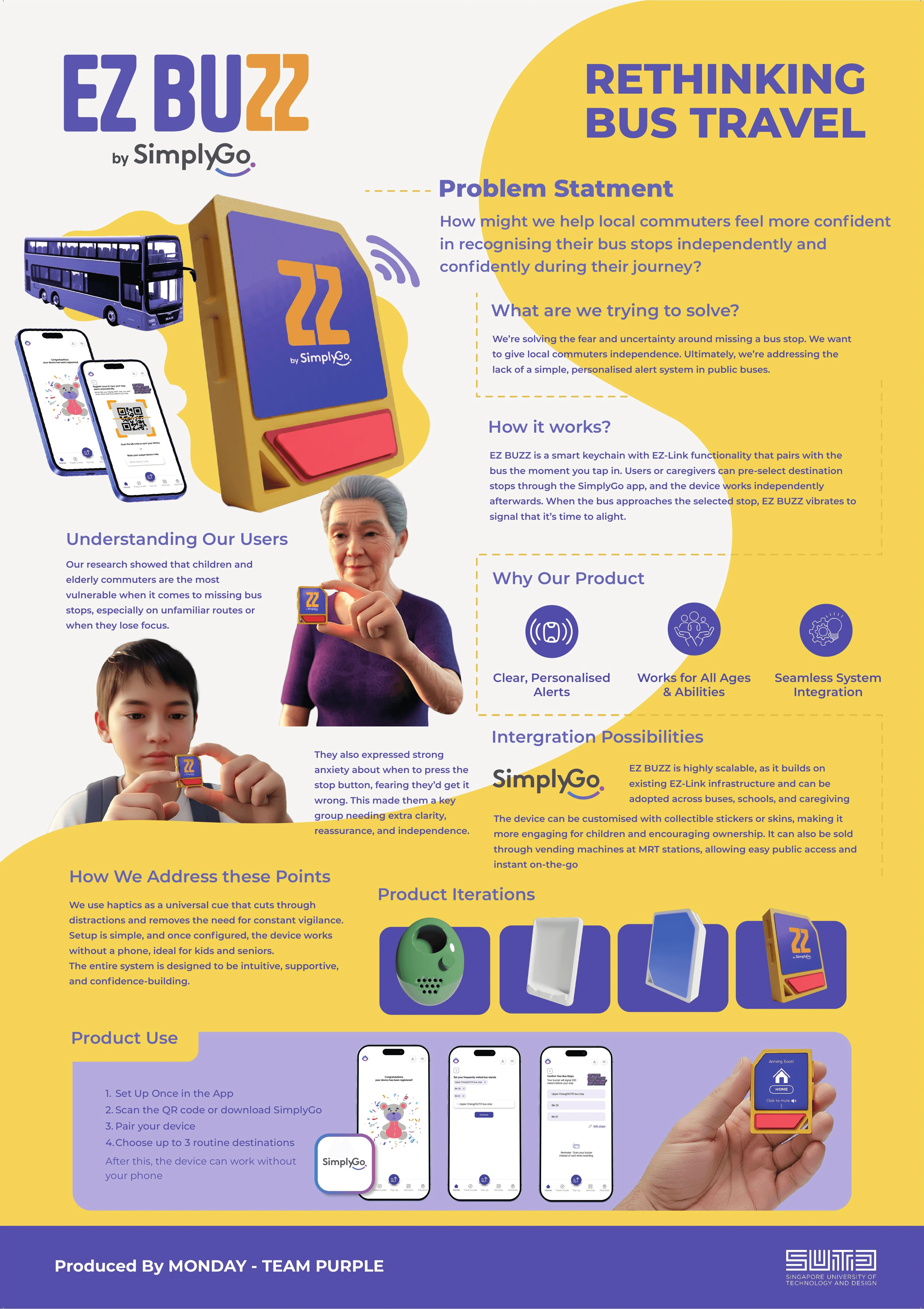
EZ BUZZ reimagines the public transit experience for vulnerable commuters through a smart, haptic enabled keychain that integrates seamlessly with Singapore’s SimplyGo infrastructure. Designed to alleviate the anxiety of missing bus stops, the device pairs with the bus system upon tapping in and vibrates to signal arrival at a pre selected destination, empowering children and the elderly to travel with greater independence. This project explores inclusive hardware design and system integration to create a screen free, intuitive navigation aid that bridges the gap between digital convenience and physical accessibility.
The Problem & The Data
Initial Research Problem:
"How might we make bus route, stop information fully accessible onboard public buses in Singapore, for commuters who are new or without smartphones such as children, elderly, tourists, or those with flat batteries so that success is measured by independent way finding, reduced reliance on captains or phones to improve commuter confidence"
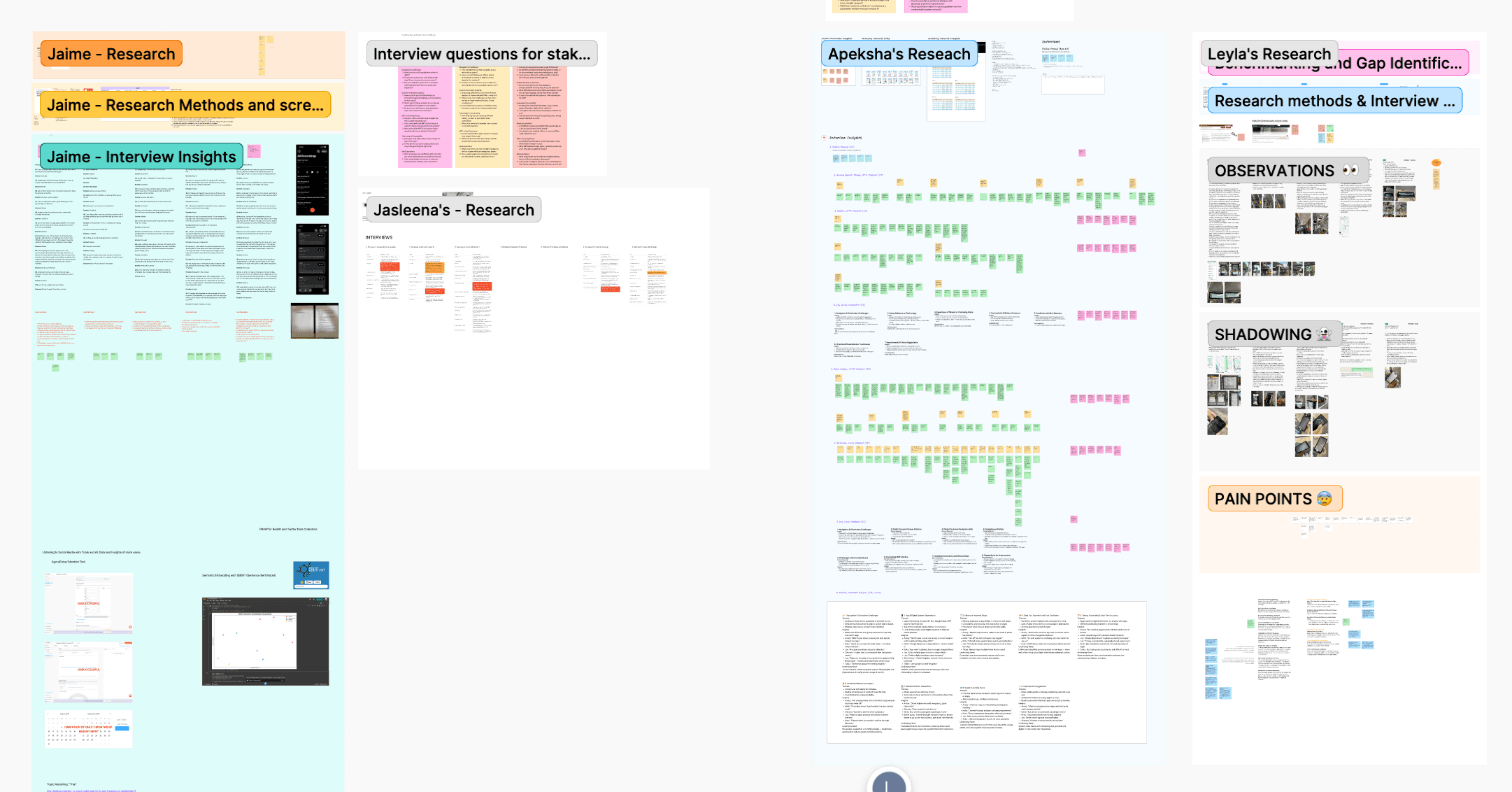
To move beyond surface level data, we coupled online surveys with immersive fieldwork and behavioral shadowing. We chose this multi modal approach because digital responses often miss the "silent" frustrations of a commute the subtle body language and environmental stressors that travelers might not think to mention in a form. By stepping into their world in real time, we could capture spontaneous insights that only emerge when you are physically navigating the same constraints as the user.
Research Documentations on Figma
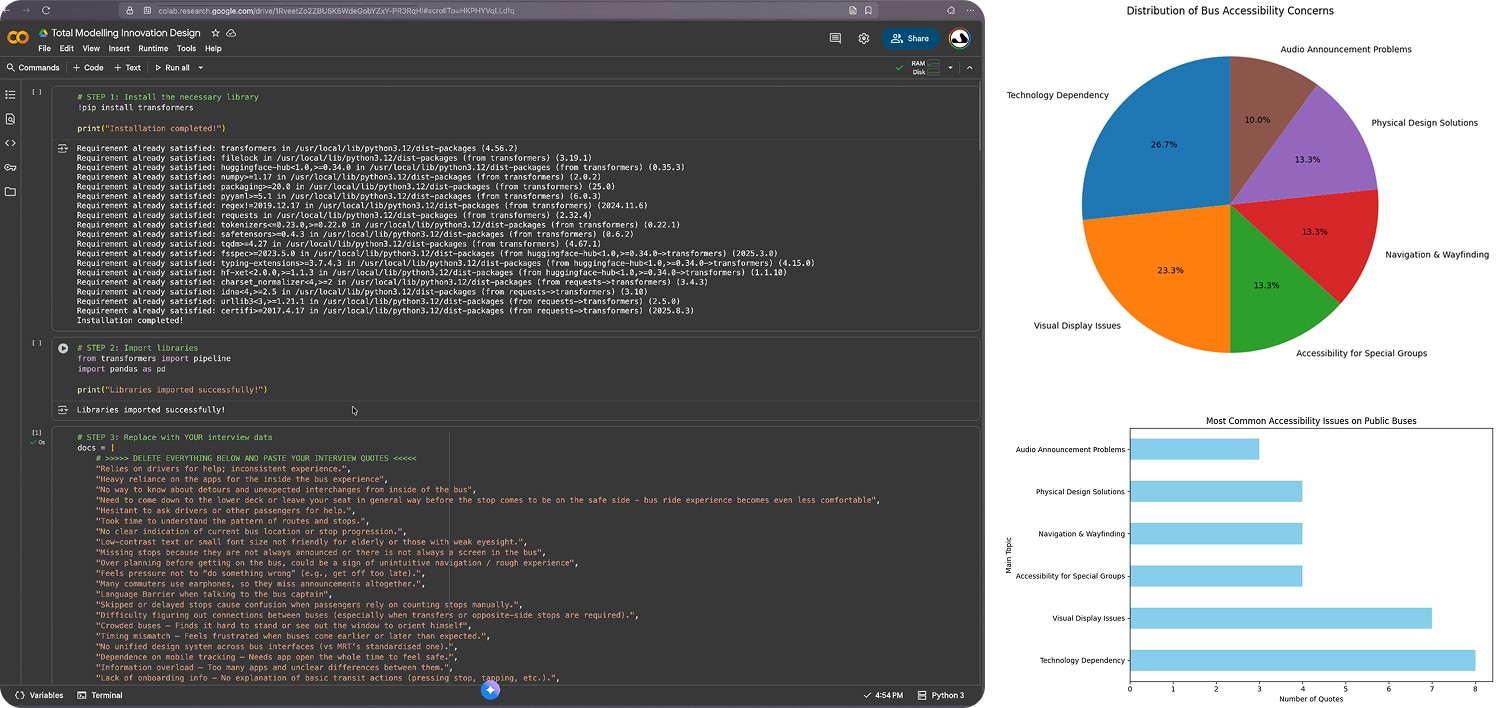
We used Python to visualize the in person survey feedback as data, which highlighted the specific pain points our device needed to solve.
We web scraped 433 reviews across 5 major iOS and Android transport apps. We then used Google Colab to compile the sentiment analysis data and it revealed a significant gap in user satisfaction: Out of 433 reviews, negative reviews (164) outweighed positive ones (113), with users citing a lack of real-time updates and limited service information as their primary frustrations.
After 2 more research sessions, it showed that the children and the elderly commuters are the most vulnerable when it comes to missing bus stops, especially on unfamiliar routes or when they lose focus.
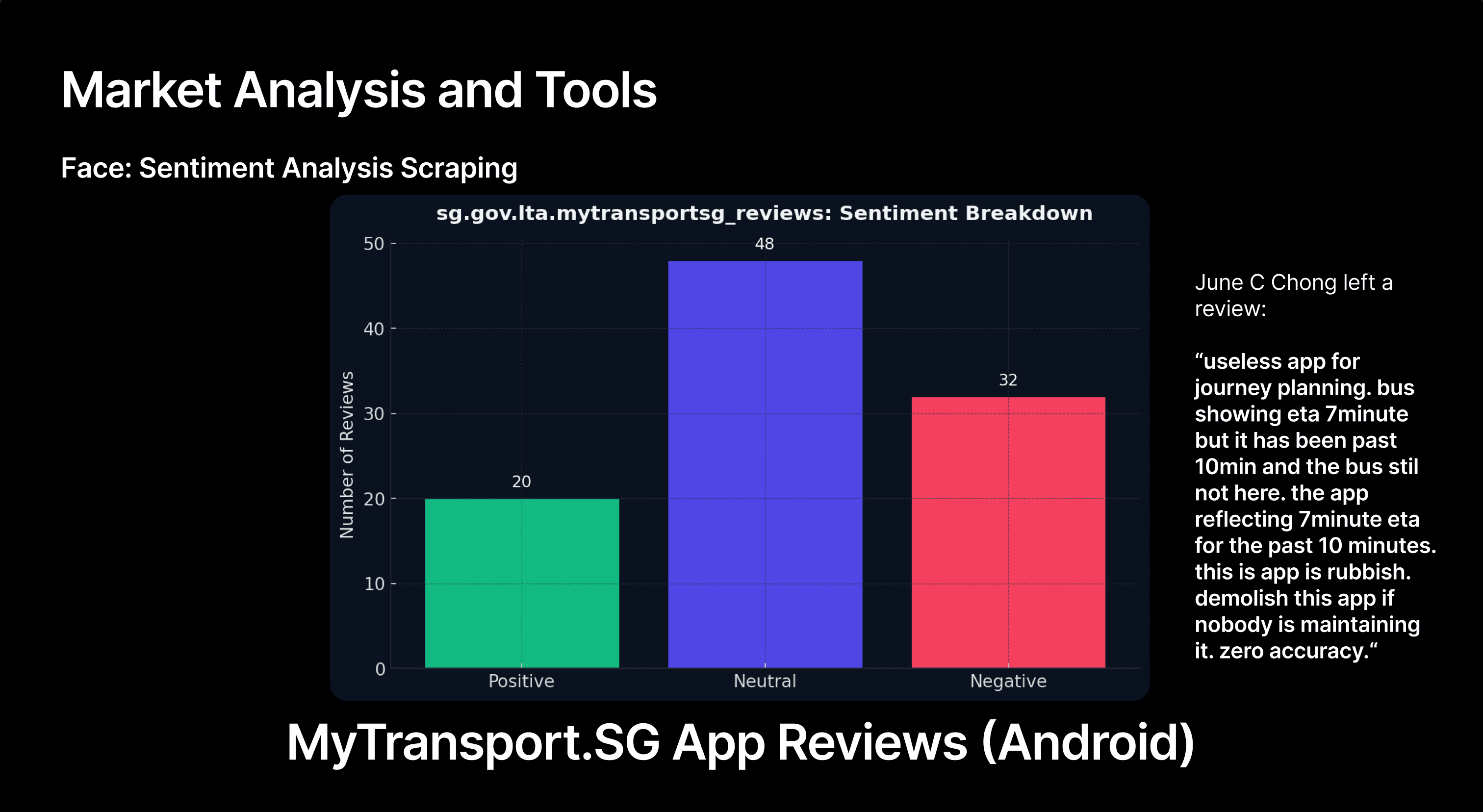
This then validated the market gap for a need of an accurate passenger information whether that is for indoor or outdoor navigation for public bus transport in Singapore.
The Process of Hardware and Software
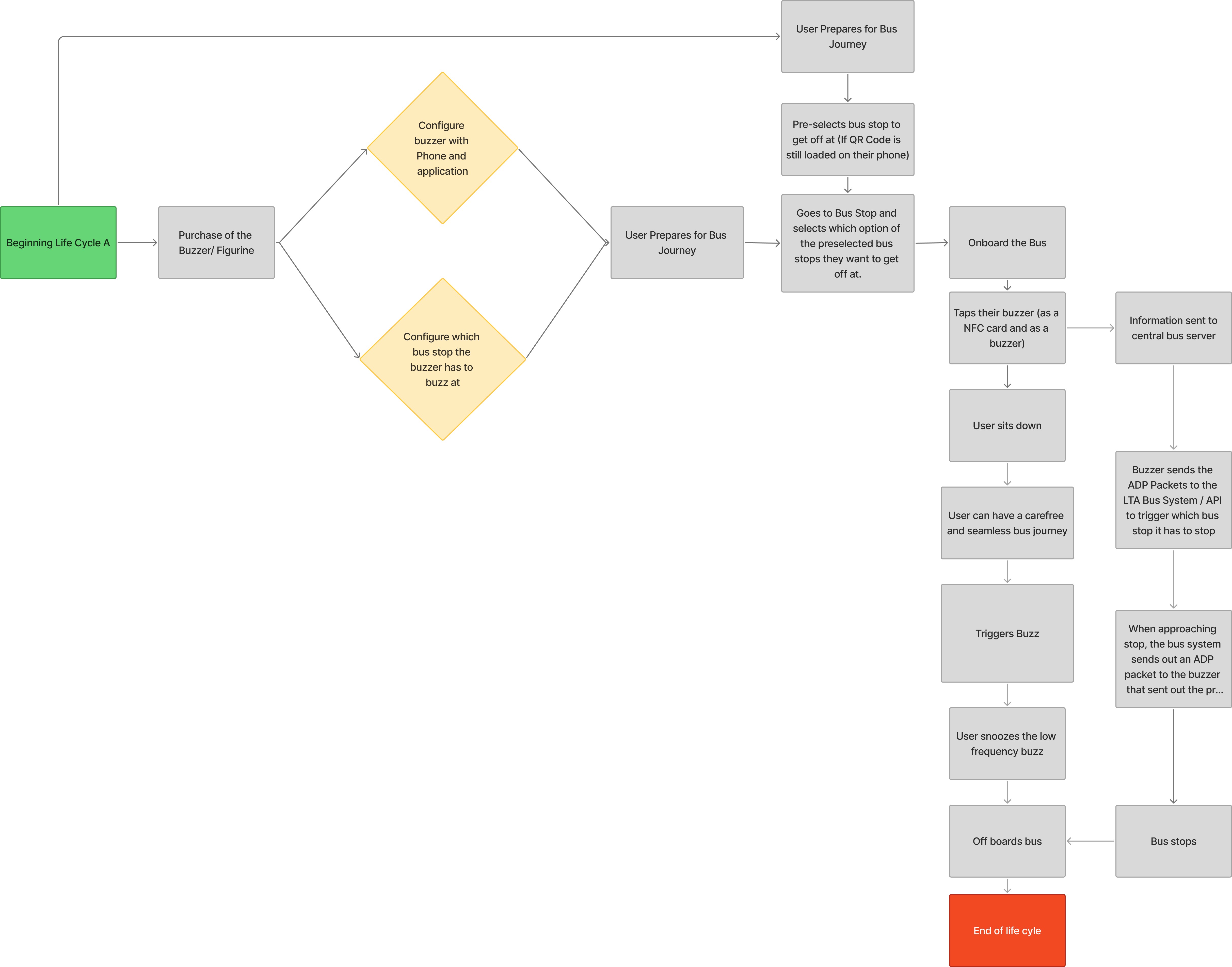
Creating the User Flow, System and the whole process of how the product will operate and scaleability was the most challenging part. Not only were there so many solution paths my team could have taken, but also narrowing down what is feasable within our skillsets and knowledge
The architecture of this flow was designed to bridge the gap between digital pre selection and physical execution. We proritized a tap and forget interaction method because our research showed that commuters value certainty over constant monitoring. By routing the buzzers signal through a central server to the bus system, we created a closed loop feedback system that automates the stop request, eliminating the anxiety of missing a destination in unfamiliar or crowded environments.
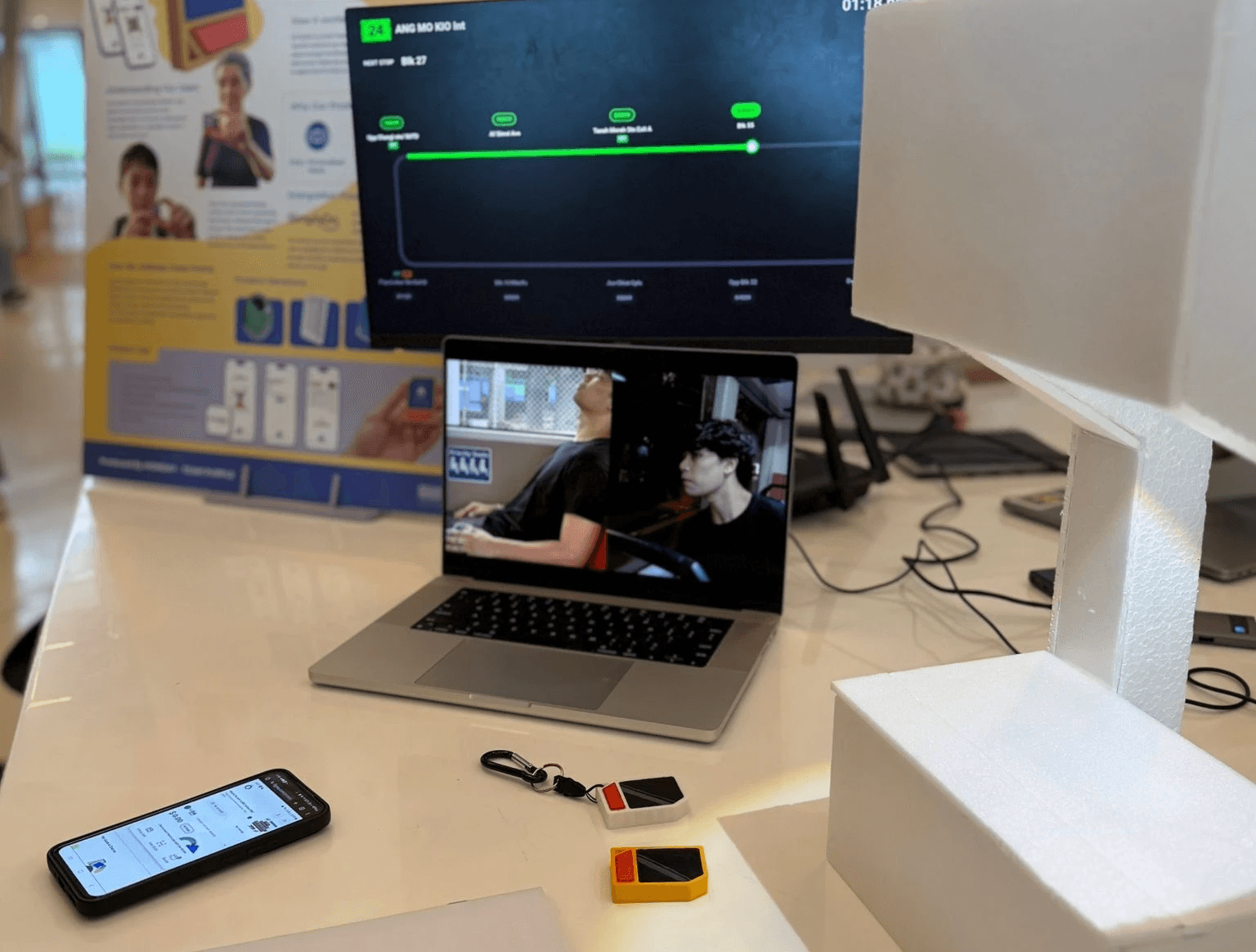
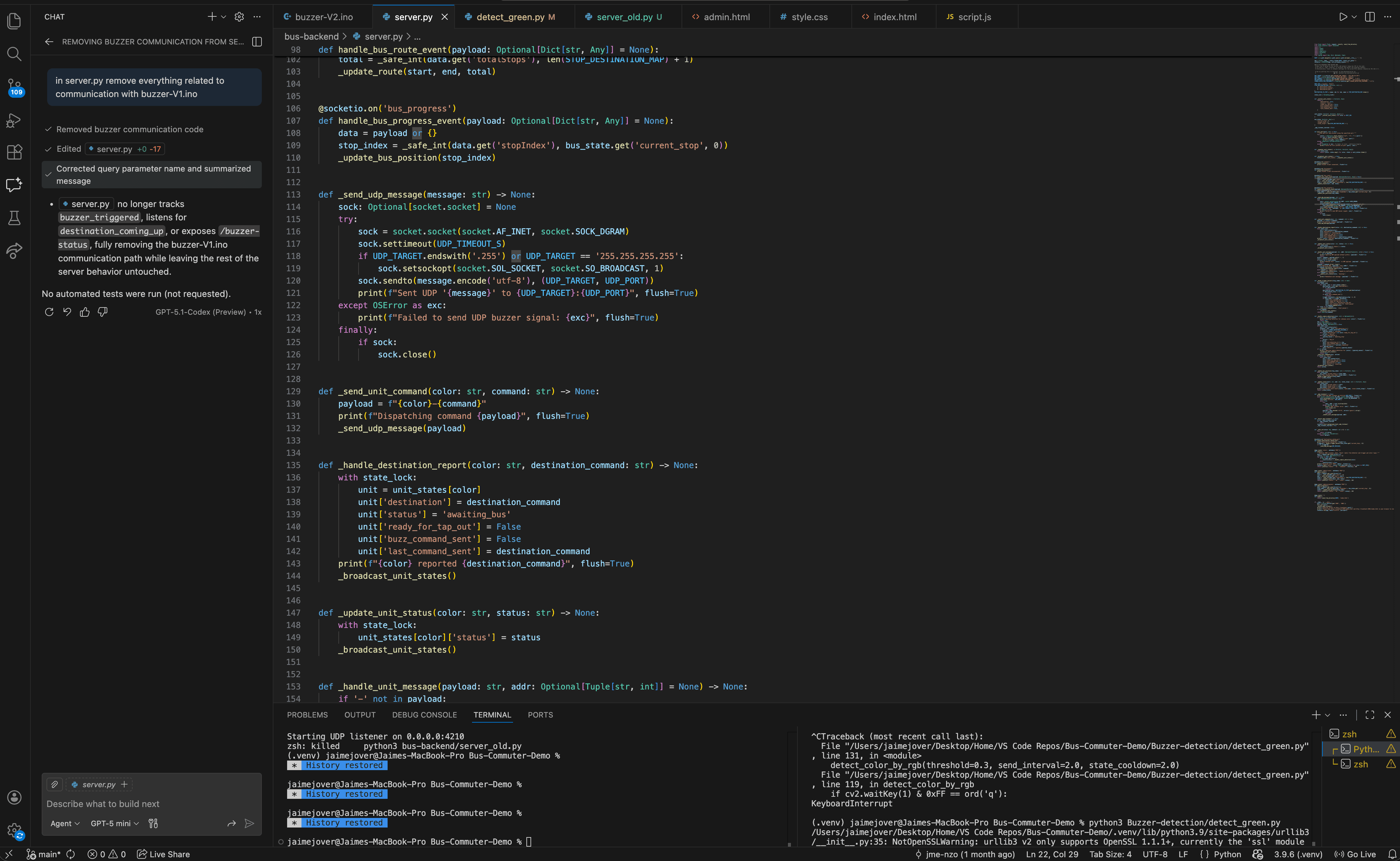
Below is a screenshot of how our system and backend works via VS Code, with the help of AI Agents (in coding .py, .ino, .html, .css, .js) and linking the whole ecosystem for the buzzer to function seamlessly.
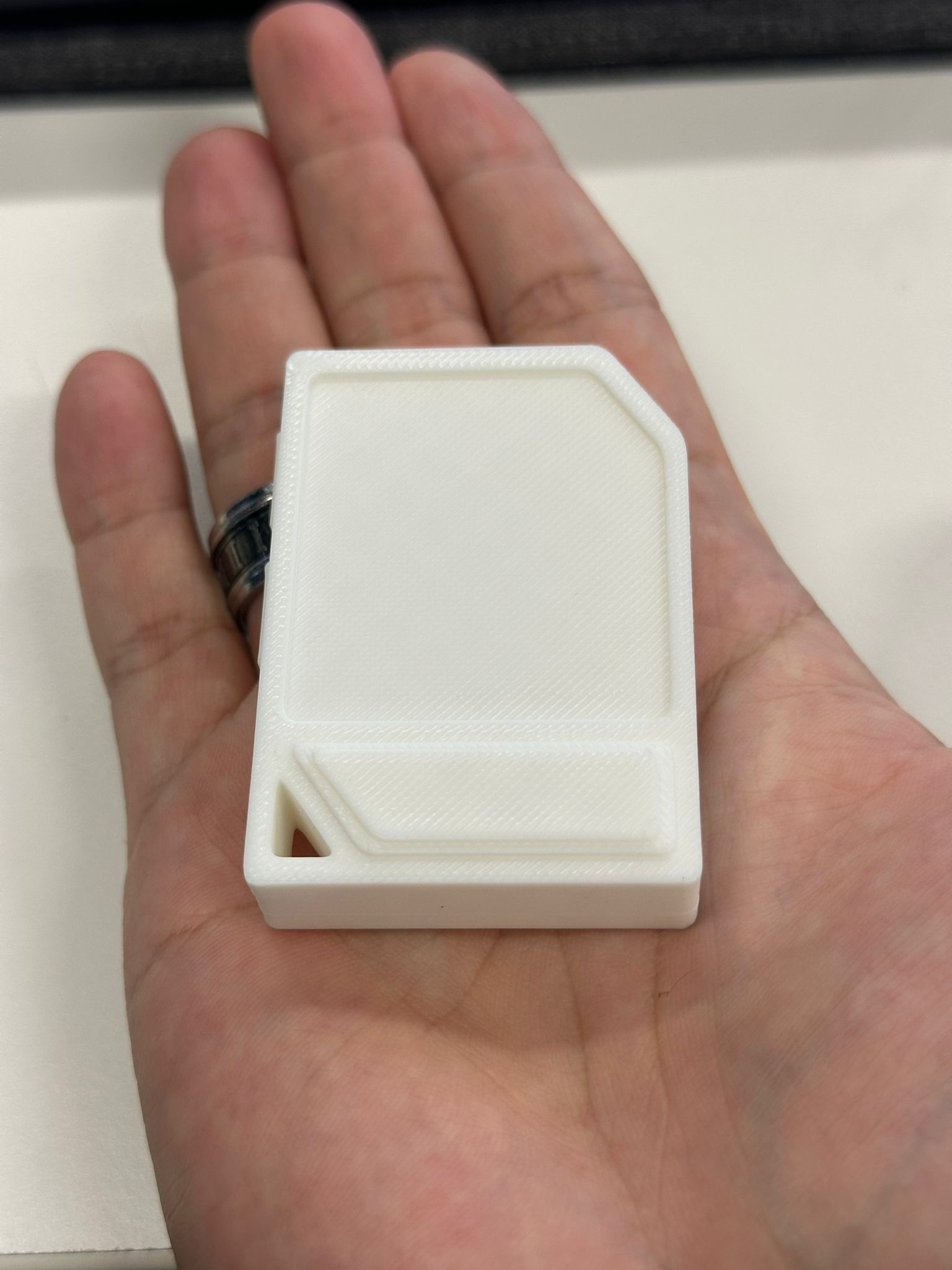
3D Print of the Product Scale 1:1
Final Poster